"“An affordable decent secure home is a legitimate aspiration” Rory Hearne
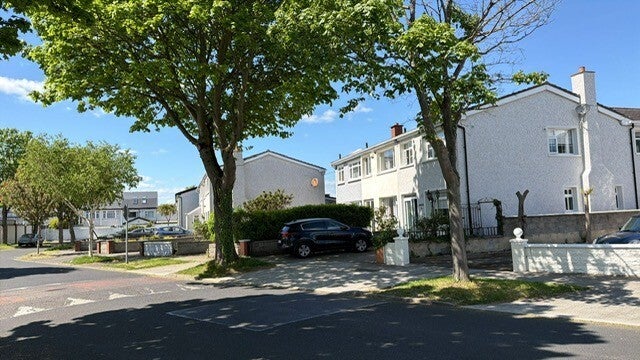
Fianna Fáils, historic, Keynesian approach to housing in Ireland from they’re entry to government in 1932, which recognised the importance of state provision housing as one of the core government responsibilities, ensured that housing policy in Ireland resulted in local authority housing provision on a large scale right up to the eighties. The Irish State ensured that home ownership was achievable “through grants and low-cost loans to builders, tax relief and low-cost mortgages to home purchasers; and it sold local authority homes to tenants at discounted rates” (Hearne, 2022 p67). Ireland was leading the way in housing provision for its population, despite high levels of emigration and unemployment, the states ideology was that housing was a common good that contributed positively to society. Social housing was also a path to homeownership which allowed families to pay affordable rent and buy when they were ready. This model of housing allowed people to stay within their social networks and when people were ready to move out of home and start their own families, the ability to do so was made possible through the states policies and political ideology. “An affordable decent secure home is a legitimate aspiration” (Hearne, 2022) from then up until the eighties. Then a seismic shift in political ideology changed the housing landscape and resulted in the crisis in housing that we see today.
The 1980’s marked a significant shift towards a neoliberal, market led model of housing provision, in which the state retreated from its previous Keynesian role in delivering social housing. The key actors responsible for housing provision increasingly shifted from the state to landlords, banks and landowners. This neoliberalist transition was further reinforced by the introduction of Real Estate Investment Trusts (REITs), contributing to the commodification of housing and the prioritising of market-based delivery mechanisms. As a result, social housing construction and provision declined steadily over subsequent decades (Hearne 2022; Kitchin et al 2015; Byrne 2019; Umfreville 2024). This transformation, in the 80’s, reflected a broader international neoliberal order shaped by the policies of Margaret Thatcher in the United Kingdowm and Ronald Reagan in the United States, which promoted reduced state intervention and market dominance. (Harvey, 2005). In the Irish context, this shift fostered a long-term reliance on private market provision, ultimately contributing to the structure of the housing system evident today. This political shift and restructuring of housing provision fundamentally altered the relationship between the state, market, and society, with significant implications for generations in accessing housing.
The negative effects of this broken system are extensive. “Housing provides us with sanctuary and a sense of identity and belonging” (Kitchin et al 2016). Contemporary Irish housing data indicates significant and worsening pressures in housing , including rising homelessness, increasing housing insecurity, unaffordability, and the growth of hidden homelessness. Displacement within communities is also intensifying. Evidence from Social Justice Ireland shows that between 2012 and 2022 wages increased by 27%, in the same period house prices rose by 78%. (Social Justice, 2024). Furthermore, the Central Statistics Office reports that, for the first time in over a century, the largest proportion of the population is now living in rental accommodation, predominantly within the profitable, private rental sector. Rory Hearne points out in his book Gaffs that for the first time in Irish history this generation is “worse-off” than the previous generation. These trends collectively illustrate the growing structural barriers to secure housing and the erosion of stable living conditions within Irish Society (Lima 2023, Hearne 2022, Byrne 2019).
This page seeks to explore real life experiences of a family that as a result of this system of housing have left their homes, social networks and identity of place and moved far away , sometimes leading to a fractured sense of belonging and a struggle to make a home away from home.
Create Your Own Website With Webador